Choosing a web hosting provider is a critical decision for any website owner. The performance of a hosting service directly impacts how visitors experience a site. In today’s digital landscape, speed is not just a feature; it is a necessity.
Recent testing reveals clear differences between two popular hosting providers. One service demonstrates a faster page load time and a quicker server response. The other, while still highly rated, shows slightly slower metrics in these key areas.
This analysis goes beyond basic feature lists. It delves into real-world performance data, including load times under stress and global server reliability. The goal is to provide a clear picture of which platform delivers superior speed and value.
Understanding these performance metrics helps website creators make an informed choice. The right hosting solution can improve search engine rankings and user satisfaction. This comparison offers actionable insights based on extensive testing.
Overview of the Hosting Landscape in 2025
In 2025, the gap between premium and budget hosting options has narrowed significantly. Technological advances allow affordable hosting services to offer features once reserved for expensive plans. This creates unprecedented value for anyone building a website.
Context for Affordable and Reliable Web Hosting
The demand for reliable web hosting at a low cost is higher than ever. Hosting providers now compete on performance optimization and security, not just price. This benefits users who need quality without a large investment.
Understanding the Target Audience
The primary audience for these services includes beginners and small businesses. They seek a simple, cost-effective choice for their first online presence. Bloggers and developers also use these plans for testing new projects.
Selecting the right hosting service involves balancing budget with future growth needs. Modern users expect fast load times and uptime from any website, making this choice crucial for success.
Introducing the Contenders
The landscape of affordable web hosting features two standout competitors with distinct approaches. These hosting providers have built strong reputations among website owners seeking reliable services. Their different philosophies shape the user experience and performance outcomes.
One contender operates globally with servers across multiple continents. This provider emphasizes cutting-edge technology like LiteSpeed servers for optimal speed. Their shared hosting plans include valuable features at aggressive price points.
The other competitor boasts official WordPress.org recommendation status. This hosting service focuses on user-friendly interfaces and comprehensive support options. Their WordPress hosting packages feature one-click installations and beginner-oriented tools.
Both hostinger bluehost services operate primarily in the shared hosting space. This means resources are shared across multiple sites on the same server. The fundamental difference lies in their technological approach to managing these shared plans.
Diving into Hostinger’s Core Features
The foundation of any hosting service lies in its shared hosting plans and the technology that powers them. This provider structures its offerings into three clear tiers, each designed for different stages of a website’s growth.
Users can choose the plan that best fits their current needs and budget.
Shared Hosting Plans and Pricing Tiers
Hostinger’s shared hosting plans are known for their aggressive introductory pricing. The entry-level option is ideal for a single website with basic needs.
Moving up the tiers unlocks significant resources and valuable features.
- Single Plan: Best for a simple blog or portfolio site. It includes 10GB storage and supports one website.
- Premium Plan: A popular choice for growing sites. It offers unlimited bandwidth and can host up to 100 websites.
- Business Plan: The top tier for performance. It adds 100GB storage, a free CDN, and daily backups.
It is important to note that renewal prices are higher than the initial promotional rates.
Performance Optimizations and LiteSpeed Integration
Beyond pricing, the real strength of these hosting plans is their performance. All tiers run on LiteSpeed web servers instead of traditional Apache.
This technology provides a significant speed boost. It includes server-level caching and is optimized for WordPress sites.
The built-in caching reduces database load, leading to faster page load times. For users seeking the best possible speed, the Business plan includes Cloudflare CDN integration.
These features ensure that even shared hosting plans deliver solid performance for most websites.
Examining Bluehost’s Key Offerings
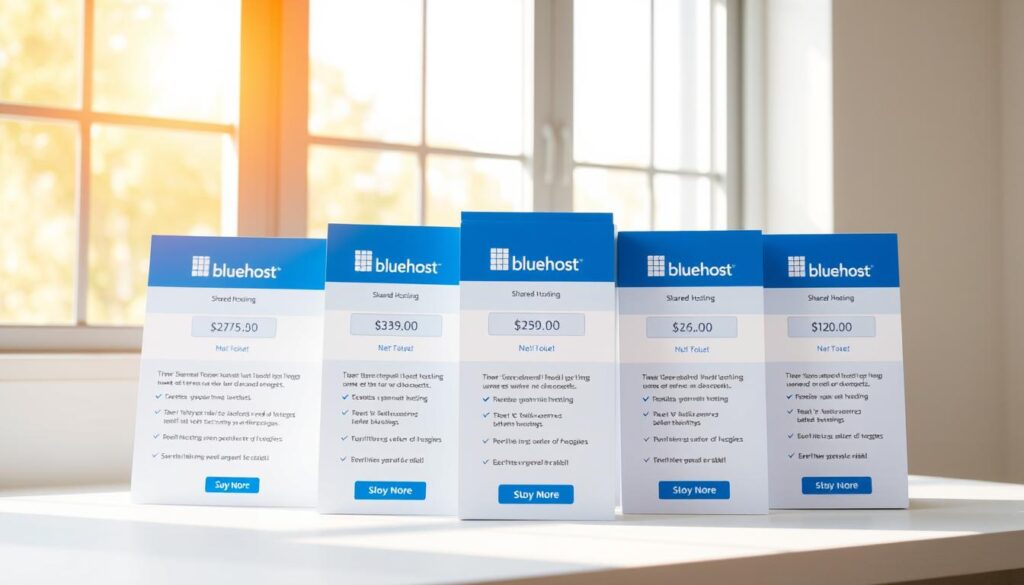
Bluehost structures its hosting plans around a clear four-tier system designed to accommodate different stages of website growth. Each plan builds upon the last, adding more resources and valuable features.
User-Friendly Control Panels and One-Click WordPress Installations
This provider emphasizes ease of use. Its custom control panel simplifies website management for beginners.
The famous one-click WordPress installation makes starting a blog or site incredibly straightforward. This approach has made the service synonymous with easy WordPress hosting setup.
Enhanced Features with Unlimited Resources
The higher-tier shared hosting plans offer significant scalability. They include unlimited storage, bandwidth, and email accounts.
Key performance features are included across all tiers. These consist of a free Cloudflare CDN and Varnish caching technology.
The top-tier Pro plan provides isolated resources on high-performance servers. This offers VPS-like benefits within a shared hosting framework.
- Basic Plan: Ideal for one website, includes 50GB SSD storage and a free domain for one year.
- Plus Plan: Supports unlimited websites and provides unlimited resources for growth.
- Choice Plus Plan: Adds valuable automated backups and domain privacy protection.
- Pro Plan: Delivers optimized CPU resources and a dedicated IP address for peak performance.
Comparing Performance and Speed Metrics
The true measure of hosting quality emerges when servers face multiple simultaneous visitors during traffic spikes. Independent testing reveals how different infrastructure handles real-world demands.
Page Load Time Analysis and Benchmarks
Standard performance tests show one provider loading website pages in under one second. The other service averages around two seconds for initial page loads. These single-user speed metrics demonstrate basic server responsiveness.
Time to First Byte measurements indicate server processing time. Faster TTFB means quicker content delivery to visitors. Mobile performance testing reveals significant differences in mobile-first indexing readiness.
Insights from Real-World Load Testing
Under simulated traffic of 200 concurrent users, hosting stability becomes apparent. One host maintains consistent 4.7-second load times. The other experiences degradation to six seconds during peak demand.
This performance gap matters for growing websites expecting traffic spikes. Consistent speed under load prevents user abandonment. The right hosting choice depends on anticipated site traffic patterns.
Server infrastructure quality shows in stress test results. Better resource allocation ensures stable page load times during high visitors periods. This protects user experience and search rankings.
Pricing Structure and Value for Money
The real value of a hosting service becomes apparent when examining renewal costs versus introductory offers. Many users focus solely on initial promotional rates without considering long-term financial commitments.
Initial Sign-Up Offers vs. Renewal Costs
Promotional pricing creates attractive entry points for new customers. However, these discounted rates typically apply only to the first billing cycle.
Renewal prices often increase significantly, sometimes doubling or tripling the initial cost. This pricing strategy affects the true value proposition of each hosting plan.
Billing flexibility varies between providers. Some offer monthly payment options while others require annual commitments. This impacts cash flow planning for website owners.
Longer contract terms usually provide better value through extended promotional rates. Yet they require greater upfront commitment from users.
Free domain registration adds immediate value but domain renewal rates differ substantially. These hidden costs affect the overall money investment over time.
Special coupon codes can extend savings opportunities for savvy shoppers. Calculating total ownership costs over three years reveals the best value hosting choices.
Shared Hosting Plans and Resource Allocation
Resource management separates effective shared hosting from mediocre offerings. Multiple websites share the same physical server resources in this hosting model. This approach enables affordable pricing but creates performance interdependencies.
Hostinger’s shared hosting plans feature clear resource tiers. The Single plan offers 10GB storage for one website. The Premium tier increases to 20GB storage while supporting 100 websites. The Business plan provides 100GB storage with unlimited email accounts.
Bluehost takes a different approach with its hosting plans. The Basic plan includes 50GB SSD storage—five times more than Hostinger’s entry level. Higher tiers offer unlimited storage, bandwidth, and websites under fair use policies.
Users must consider practical implications of these allocations. Hostinger’s 10GB storage suits blogs with moderate image usage. Bluehost’s unlimited model eliminates bandwidth concerns but relies on reasonable usage terms.
When resources are exceeded, providers may throttle performance or require upgrades. Hostinger’s defined limits offer predictability. Bluehost’s fair use policies provide flexibility with responsible usage expectations.
The Bluehost Pro plan delivers isolated resources within a shared hosting framework. This provides VPS-like benefits while maintaining management simplicity. It represents a unique value for users needing guaranteed performance.
Managed WordPress Hosting and Specialized Tools

WordPress powers over 40% of websites, making specialized hosting solutions essential. Both providers offer managed WordPress hosting features that go beyond basic shared plans. These optimizations significantly improve website performance and simplify management.
Automated Backups and Free SSL Certificates
Data protection varies between plans. Hostinger provides weekly backups on entry-level options. Their Business plan upgrades to daily backups for comprehensive protection.
Bluehost includes automated daily backups starting from their Choice Plus tier. This ensures recent recovery points for any website.
Security implementation also differs. Both offer free SSL certificates, but Hostinger charges extra for SSL on their Single plan. Bluehost includes free SSL across all tiers at no additional cost.
The managed WordPress approach extends to performance tools. Hostinger integrates LiteSpeed caching for faster loading. Bluehost provides staging environments and automatic updates.
These wordpress hosting features create distinct advantages. Beginners appreciate simplified management while technical users value optimization controls. The right managed wordpress solution depends on specific needs and skill levels.
User Experience and Control Panel Usability
Managing a website should be straightforward, not a complex puzzle. The control panel is the command center for any hosting account. Its design critically shapes the user experience.
One provider’s custom dashboard is renowned for its beginner-friendly approach. It features intuitive navigation and clear visual organization. This design guides new users through common tasks like domain setup.
Ease of Use for Beginners
The interface simplifies workflows, offering one-click access to WordPress tools. It even integrates a website builder for non-WordPress users. This creates a smooth onboarding experience.
The other provider uses a modern, proprietary control panel. It boasts a clean design and quick access to essential functions. Integrated tutorials help reduce the learning curve for managing a site.
Customizability and Dashboard Features
Both dashboards handle core tasks well. Features include file management, email configuration, and database access. Built-in software installers add significant value.
For advanced users, these panels provide sufficient technical settings. Options for PHP configuration and cron jobs are available. Extensive knowledge bases offer searchable documentation directly within the interface.
Customer Support and Live Chat Comparisons

A hosting provider’s true value is often revealed not during setup, but when a customer needs urgent help. The quality of this support experience separates reliable services from frustrating ones.
24/7 Availability and Response Times
Both companies offer 24/7 live chat support. However, their performance differs greatly. One provider connects users to an agent in under two minutes.
The other service also has quick initial chat response times. But testing showed agents sometimes disappear for several minutes mid-conversation.
This inconsistency can turn a simple question into a 30-minute ordeal. For a customer, fast and consistent responses are crucial.
Agent Expertise and Upsell Tactics
The knowledge and approach of support agents significantly impact the service. One team provides helpful, accurate answers without pressure.
The other provider’s agents frequently engage in upselling. They may suggest more expensive plans even for basic queries.
This aggressive sales tactic degrades the customer experience. It can erode trust in the hosting company’s recommendations.
For beginners, patient and straightforward support is invaluable. It builds confidence in managing their website effectively.
Security Features and SSL Implementation
The implementation of SSL certificates and advanced security features distinguishes reliable hosting services from basic providers. These security measures protect website data and build visitor trust through encrypted connections.
Both providers offer free SSL certificates, but with different approaches. One includes SSL protection across all plans at no extra cost. The other charges additional fees for SSL on its entry-level option.
Comprehensive security extends beyond basic SSL implementation. One service integrates Cloudflare protection defending against DDoS attacks and malware. This network-level security works regardless of website size.
The other provider requires purchasing additional services for comparable protection. Their malware scanning tool has limitations, checking only 5-10 pages simultaneously. This makes it less effective for larger sites with extensive content.
Domain privacy protection varies between services. One includes this valuable feature free with mid-tier plans. The other’s domain privacy offering is less prominently featured in their hosting packages.
These security features demonstrate different approaches to website protection. One provider delivers comprehensive security within standard hosting plans. The other relies more on upsold add-ons for advanced protection.
Uptime, Reliability, and Load Handling

A hosting service’s true reliability is measured by its uptime and ability to handle traffic. This analysis examines how consistently each provider keeps a website accessible and responsive.
Uptime Guarantees and SLA Commitments
One provider offers a concrete 99.9% uptime guarantee backed by a service-level agreement. This promises a refund if the site falls below that threshold.
The other service uses a more general promise of “best” uptime without a specific percentage. This lack of a formal SLA offers less financial accountability for users.
Over six months of monitoring, both hosting companies demonstrated exceptional performance. Their average monthly uptime was nearly identical, differing by only minutes of downtime.
Stress Testing Under Multiple Visitors
Load testing simulated 200 simultaneous visitors accessing a test website. This stress test reveals how a host performs during traffic spikes.
Both services handled the load without crashing. However, one host maintained a significantly faster average load time of 4.7 seconds.
The other provider’s performance degraded to an average of six seconds. This difference becomes critical for a growing website expecting surges in visitors.
For most small sites, both offer solid reliability. But the consistency under load gives one service a slight edge for busier websites.
Extra Perks: Free Domains, Backups, and CDN Integration
Additional features can significantly impact the total cost of ownership and website functionality. These value-added services often determine the best hosting choice for different user needs.
Comparing Free Domain Offers
Both providers include a free domain name for one year with qualifying plans. This represents substantial savings for new website owners.
The domain registration requires an annual commitment. After the first year, standard renewal rates apply. Users should consider long-term domain costs when selecting their hosting plan.
Availability of Content Delivery Networks
Content Delivery Networks (CDNs) accelerate website loading for global visitors. One service includes CDN access on all shared hosting plans. The other reserves this feature for higher-tier options.
CDN integration becomes essential for sites targeting international audiences. Local-focused businesses may find limited benefit from this technology.
Backup solutions also vary between providers. Weekly or daily automated backups protect website data. Higher-tier plans typically offer more frequent backup schedules.
Marketing credits provide additional value for businesses planning advertising campaigns. These bonuses can reduce initial marketing expenses significantly.
Hostinger vs Bluehost: The Ultimate In-Depth Comparison

A thorough examination reveals distinct advantages for different user scenarios across these popular hosting services. The comprehensive testing data shows clear patterns in performance, pricing, and feature sets.
For budget-conscious users, one provider offers superior value with lower entry costs. Its faster single-visitor performance makes it ideal for personal blogs and small websites. The included security features provide excellent protection without additional expenses.
The other service demonstrates remarkable stability under heavy traffic loads. This makes it the better choice for growing businesses expecting visitor spikes. Its generous resource allocation on basic plans supports substantial growth potential.
Support quality represents another critical differentiator. One company provides immediate, helpful assistance without upselling pressure. The other maintains comprehensive support channels but sometimes employs aggressive sales tactics.
Ultimately, the best web hosting choice depends on specific needs. Budget-focused users with simple requirements will find exceptional value in one option. Those prioritizing WordPress integration and traffic stability may prefer the alternative.
Both services deliver competent hosting solutions for the affordable segment. The decision hinges on whether raw speed or load consistency matters more for your web project.
Long-Term Considerations and Scalability
Beyond initial setup fees, long-term hosting relationships demand attention to renewal pricing structures. Website owners should consider how their needs will evolve over multiple years.
Renewal Pricing and Future Upgrades
Renewal rates significantly impact total ownership costs. Many hosting services offer attractive introductory pricing that increases substantially upon renewal.
Users planning for growth should evaluate upgrade paths carefully. Both providers offer progression to more powerful hosting solutions as websites expand.
Cloud hosting represents an excellent middle-ground option. These plans provide dedicated resources while remaining affordable for growing businesses.
The upgrade process should be seamless with minimal downtime. Quality hosting services facilitate smooth transitions between different plan tiers.
Website traffic thresholds often signal when to consider upgrades. Monitoring performance helps users identify the right time to scale their hosting options.
Final Reflections on the 2025 Hosting Showdown
Both services demonstrate excellence, but serve distinct user profiles and website goals. The best web hosting choice depends entirely on individual priorities and requirements.
Hostinger earns its “Best for Small Business” designation through exceptional value. This hosting provider delivers solid performance at budget-friendly prices. It’s ideal for simple websites with predictable traffic patterns.
Bluehost stands out for WordPress-focused projects and beginners. Its official WordPress.org endorsement and unlimited resources support growing websites. The A+ rating reflects its beginner-friendly approach.
Both hosting providers represent legitimate options for different needs. Special discounts make initial commitment financially attractive. The final decision should match your specific website requirements.